
A photograph can bring back the color of an afternoon. Sometimes it is a sound you wish you had kept: the loose rhythm of a flag, a distant call, or the conversation that made an ordinary bench feel like the right place to stop.
A coastal sound journal does not need an audio recording. It can be a few words, a line of pencil marks, or a note about what you noticed. The aim is a personal record, not a complete account of the soundscape or a test of how closely you can listen.
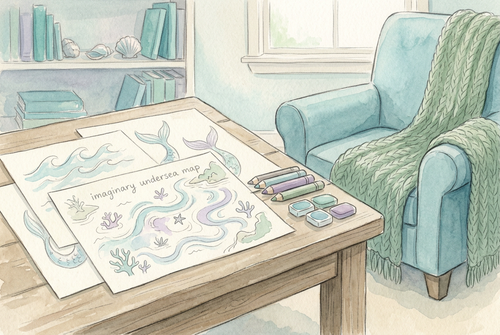
Image note: The featured image is AI-generated conceptual artwork, not a photograph of the author’s journal, a tested activity, or a particular destination. You do not need an ocean view or a new notebook to try this.
Your journal session at a glance
- Suggested time: 10–20 minutes, plus any travel. A single short entry is enough.
- Where: At home or at a permitted California coastal stopping place suitable for your needs and current conditions.
- Cost: No purchase is needed if you have paper and a pencil or a device you already use for notes.
- Materials: A notebook or scrap paper and a writing tool. Audio recording is not required.
- Access: Adapt the exercise to hearing, sight, movement, words, or another comfortable way of noticing. You do not need to hear a particular sound to participate.
Choose a place where you can remain aware
For an outing, check official destination information for current hours, closures, route access, toilets, seating, and conditions. Stop in a permitted place away from hazards without blocking a path. Follow barriers and posted instructions.
Keep awareness of your surroundings. Do not close your eyes, block out warning sounds, or move toward an uncertain sound to identify it. This exercise is not navigation guidance or a way to judge waves, tides, wildlife, or other hazards.
If you are supervising children, keep that responsibility first. A short shared noticing game at home may fit better than a private listening session outdoors.
1. Make a small heading
Write the date, an approximate time, and a description of where you are. “At the kitchen window” is as useful as the name of a coastal destination. If you do not want a precise location in your notes, keep it general.
Add one ordinary detail about the setting: seated indoors, beside a permitted path, or looking at an old photograph. This gives your future self context without implying you were somewhere you were not.
2. Describe one sound without naming its source
If listening suits you, choose one sound you can notice from your stopping place. Describe its quality before guessing what makes it. Is it short, repeating, uneven, soft, or sharp?
Try writing a sound word or drawing a mark. Dots might represent separate taps; a long pencil line might represent something continuous. You are inventing your own notation, not using a scientific measurement.
3. Separate what you know from what you imagine
“Three short calls in the distance” is an observation. Naming a particular bird is a separate claim that may need checking. If you are unsure, write a question rather than turning a guess into a fact.
Likewise, a poetic comparison can stay clearly poetic. “It sounded like paper being shaken” describes your impression without claiming that paper was the source.
4. Notice a pattern, not a volume target
Choose a brief interval that feels comfortable and ask whether the sound repeats or changes. You do not need to hear more quietly, stay longer, or move closer.
If the setting feels overwhelming or uncomfortable, stop or change locations. Do not remove hearing protection you need in order to complete the exercise. This activity makes no claim that listening to coastal sounds provides a health benefit.
5. Add a memory line
Finish one sentence:
- This sound reminds me of…
- The detail I might have forgotten is…
- If I described this afternoon without a photograph, I would say…
A memory does not need to be happy or meaningful to belong on the page. If you would rather keep the entry factual, list what you noticed and stop there.
A visual version of the same journal
If listening is not accessible or appealing, use movement or shape instead. Watch a shadow change, notice fabric moving in the wind from a suitable place, or compare repeated shapes in a view.
Use the same headings: what I noticed, how I would mark it, and what I want to remember. There is no need to describe this as a substitute. It is another complete way to make the page.
An at-home version
Notice the sounds or visible rhythms of your own space: a nearby curtain, light on a wall, or the pattern of ordinary household activity. If using a remembered coastal scene, label it “from memory.”
You can also revisit your own past recording or photograph, but do not assume online audio or images are available to copy or republish. The simplest version needs no borrowed media at all.
If you want to record audio
Recording is optional and separate from the written exercise. Check the rules and permissions relevant to your setting and intended use, especially where identifiable conversations could be captured. Do not assume that being outdoors makes every recording appropriate to share.
Keep other people’s privacy in mind, ask companions before recording them, and avoid disturbing wildlife or others to create a cleaner track. A notebook entry can avoid these complications entirely.
Turn several entries into a small collection
If you enjoy the exercise, make another entry on a different day. Compare your words or marks rather than treating the pages as a study of environmental change. Different places, conditions, and attention can all affect what you notice.
Give the pages a personal title such as “Afternoons I Wanted to Remember.” They can remain private. You do not need a public series, a new notebook, or a daily streak.
Leave the place as you found it
Keep paper and supplies secure from wind and take belongings and rubbish home. Leave natural objects and wildlife undisturbed. A journal records an encounter without needing to bring part of the habitat away with you.
Another quiet activity to try
For a different at-home pause, read A Beach-Inspired Tea Break at Home. It shares the same approach: use what you already own and let one small moment be enough. You do not need to combine the activities or turn either into a daily routine.
About this guide
This is an original editorial creative activity, not a personally tested itinerary, a scientific sound survey, a hearing exercise, or a therapeutic recommendation. Timings and prompts are suggestions. No destination’s current conditions, access, facilities, fees, or recording rules have been verified. Consult official site information before an outing and check permissions relevant to any recording or publication. No new equipment purchase is required.
Your next step: make one heading, describe one sound or visible rhythm, and write one line you would like to remember. Let a small entry be enough.