
Granite boulders, palms, and blue water make Seychelles easy to imagine as a single beach scene. Planning a visit means looking past that image: which island will you stay on, how will you reach it, and how much of the trip do you want to spend moving between places?
This is a research-based starting point, not a firsthand travel diary or a promise of a perfect escape. It focuses on decisions to make before booking, with official sources to revisit for your own dates.
Choose a base before building an island list
Mahé, Praslin, and La Digue are useful islands to research, but they are not a compulsory three-stop itinerary. The official tourism information identifies Mahé as the main and largest island, with substantial services and tourism infrastructure. It also describes Praslin and La Digue as important visitor destinations. That does not make them the three largest islands.
Start with the official About Seychelles overview and ask what you want from your base: access to particular places, fewer accommodation changes, or time around one area.
A longer list is not automatically a better trip. One base, or fewer moves, may suit your budget, access needs, or family routine better. If you add another island, give it a reason beyond completing a set.
Plan transfers as part of the day
The tourism board describes air and sea transport operating from Mahé. Its Getting Around directory is a starting point for identifying transport providers, not a substitute for checking an operator’s current service.
Before booking accommodation around a transfer, confirm the actual route, departure point, schedule, check-in requirements, baggage arrangements, cancellation terms, and onward connection. Include the journey to and from a port or airport, not just the advertised time aboard.
Ask operators directly about boarding arrangements and any mobility or assistance needs. If travelling with a small child, check age-specific booking rules and the practical arrangements your family requires rather than assuming every service works the same way.
Leave space around connections and ask what happens if a service changes. This guide does not promise smooth crossings, reliable connections, or a specific journey duration.
Give Praslin a purpose beyond another beach
If forest and plant life interest you, research Vallée de Mai on Praslin. The Seychelles Islands Foundation describes it as a remnant of ancient palm forest containing the islands’ largest intact forest of endemic coco de mer palms.
Use the Foundation’s Vallée de Mai visitor information to check current admission, opening hours, route options, guiding, and facilities before planning around it. The site describes the visitor centre and first part of the forest as wheelchair accessible; that is not a claim that the entire forest route is accessible.
For a family visit, choose an activity that can be short: noticing leaf shapes, listening from a permitted stopping place, or drawing one plant afterward. Seeing a named bird or completing a particular trail need not be the measure of success.
Research La Digue without turning a photograph into a plan
A beach image does not tell you how to reach the location, whether admission or access arrangements apply, what the route involves, or whether the conditions suit your group.
If La Digue interests you, check the specific accommodation, transport, and places you hope to visit before committing. Ask about distances, terrain, assistance, and practical alternatives. Do not assume a bicycle is suitable for everyone, or that a beautiful shoreline is an appropriate swimming place.
A named beach can remain something you are curious about without becoming an obligation on the itinerary.
Build a budget from the whole journey
Rather than relying on a headline “daily budget,” collect current quotes for the trip you would actually take. Include international travel, accommodation, island transfers, local transport, meals, site entry, and any activities you choose. Ask what each quoted price includes and which currency it uses.
Add room for changed plans. Compare a simpler itinerary with one that requires extra transfers and accommodation moves. Savings in one category can be offset by costs elsewhere.
No sample total is presented here because dates, departure points, accommodation choices, and household needs differ. Decide what you can spend before letting an attractive route decide for you.
Make wildlife and protected-area visits observational
Read the rules for the particular protected area you plan to visit. The Seychelles Parks and Gardens Authority’s visitor information includes rules against collecting shells, plants, corals, or other aquatic life in its marine parks, alongside requirements to respect marine life and avoid littering.
Do not treat wildlife as a prop for close photographs or assume that an encounter described by a tour provider is guaranteed. Follow staff directions and site-specific rules. Ask how an activity is managed before booking if its description depends on touching or approaching animals.
How to Observe Marine Life Without Disturbing It offers general observation principles, but local instructions remain the source for a particular site.
Keep ocean activities separate from the scenery
Clear-looking water does not establish suitable conditions for swimming, snorkeling, diving, or boating. Those activities require separate decisions about current local conditions, appropriate skills, qualified guidance, and the actual operator or site.
You can plan a coastal visit without making water entry its purpose. A view from a permitted place, a conversation, or a sketch can be enough. No particular season, beach, or itinerary is presented here as safe for a water activity.
Leave room for ordinary days
Meals, laundry, travel, rest, and different people’s interests belong in a trip too. If you are travelling with children, avoid assuming they will enjoy the same pace as an adult collecting highlights.
Ask local hosts or guides respectful questions about the places you visit rather than expecting every conversation to become a cultural experience. Seychelles is a lived-in place, not just a backdrop for someone else’s holiday.
For help leaving space without abandoning practical planning, read Choosing Experience Over Itineraries.
If this is a research project rather than a booking
Start with a map and one question: what would change if you stayed on one island instead of moving between several? Compare official information, make a short list of unknowns, and stop before turning curiosity into a spending commitment.
At home, children who want to join in could draw a palm shape from an identified source or help find island names on a map. There is no need to purchase travel supplies or promise a future trip.
Your next planning step
Choose a possible base and one main interest, then check the transport and accommodation details that would make that choice workable. Confirm current official travel requirements and advice through the relevant authorities before booking; this article does not establish entry eligibility or document requirements.
The aim is not to see everything. It is to make a plan that fits your circumstances and leaves enough room to change it.
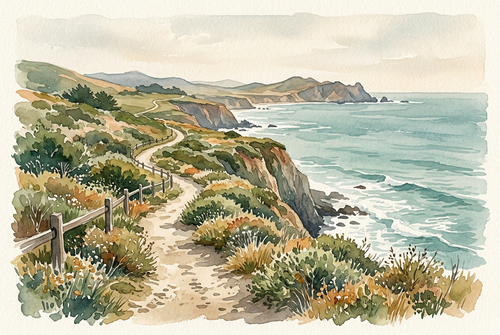
Sources were reviewed through official tourism, Seychelles Islands Foundation, and Parks and Gardens Authority search extracts. Consult the linked sources and providers for current details. The featured watercolor is an imagined Seychelles-inspired coast, not a photograph, location map, or record of a personal visit.