
A child wants to see beyond a barrier. The weather changes a plan everyone was looking forward to. A wave looks exciting, and someone asks to get closer. These can be ordinary moments when adults need to be clear without making the outdoors sound like an enemy.
Respecting nature's power does not mean asking children to be fearless or frightening them into obedience. It can mean explaining a boundary, keeping responsibility with adults, and allowing curiosity to continue from a suitable place.
Give a clear instruction before a long explanation
When a boundary matters, start with what the child needs to do: “Stay beside me,” or “We are stopping here.” An explanation can follow when you are in an appropriate place to talk. A child does not need to understand every possible hazard before an adult acts.
Before an outing, adults should check current access, weather, local hazards, route information, facilities, and site rules. Choose a place that suits the group's mobility, energy, and supervision needs. A conversation about boundaries is not a substitute for preparation or close supervision.
“We can look from here”
If a child wants to cross a fence or move toward surf, a calm explanation might be: “I know you want a closer look. We are staying on this side.” Keep the instruction specific rather than inviting the child to judge how close is acceptable.
You can offer an alternative without negotiating the boundary: notice a color, describe a shape, or draw the view later. It is also fine if the alternative is not exciting enough. A necessary limit does not depend on making the child happy about it.
Stay on designated routes, respect barriers and closures, and remain well back from surf and cliff edges. Do not move closer to demonstrate a hazard or create a memorable lesson.
“The plan has changed”
A weather change or closure can be disappointing. Try: “We wanted to go there today, and the conditions do not work for our visit. We are choosing something else.” You do not need to promise that the replacement will be even better.
For a young child, keep the explanation short and concrete. An older child may want to look at the official notice with you. Adults still make the decision; the child is not responsible for interpreting forecasts or deciding when it is safe to continue.
For more practical planning ideas, read How Coastal Weather Teaches Flexibility and Preparedness.
Notice weather without asking children to predict it
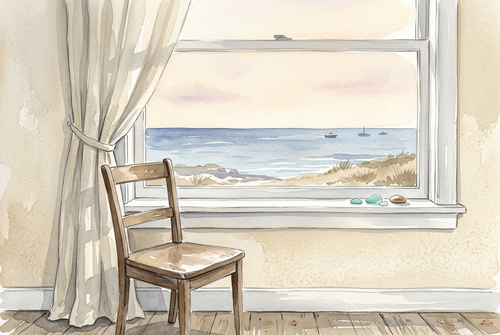
On an ordinary day indoors, you might look through a closed window and describe what you can see: rain on the glass, moving branches, or a changing patch of light. Draw or talk about the observation if you like. You do not need to turn it into a forecast.
Keep observation separate from a safety decision. “The branches are moving” describes something visible; “it is safe to go out now” requires more than that observation. Follow current official guidance and alerts for your location. Do not go outside or remain near an exposed view to watch hazardous weather.
“You can ask for help”
Let children know they can tell you when something feels uncomfortable, confusing, cold, or tiring. A useful response is to listen and act rather than praise them for enduring more.
You might say, “Thank you for telling me. Let's pause and work out what we need.” Depending on the situation, that may mean a rest, another layer, a shorter visit, or leaving. Adults should also notice needs children cannot yet explain.
Asking for help is not a task to perform correctly before care is offered. A toddler who cannot describe the problem still needs the adult to respond.
Leave room for wonder
Clear boundaries do not mean every conversation must be about danger. From a suitable place, a child can wonder why a bird moves a certain way or how a cloud changes shape. You can say “I don't know” and bring the question home.
A sketch, spoken description, or story can keep that curiosity alive without handling wildlife or collecting natural objects. For practical habits that care for a place, explore Teaching Environmental Respect Through Exploration.
Model a limit you are willing to follow yourself
Children can hear “stay behind the barrier” and still notice an adult stepping over it for a photograph. Keep your own actions consistent with the limit. If you change your mind about an outing, explain plainly rather than framing the change as a defeat.
You can acknowledge an adult mistake without asking the child to manage it: “I planned too much today. We are going to make the next visit shorter.” That gives the conversation somewhere practical to go.
Keep the lesson proportionate
One clear moment may be enough. There is no need to follow every boundary with a frightening story, a quiz, or a promise that remembering it will make a child safe.
The aim is not to control nature or eliminate every uncertainty. It is to show that curiosity, care, and limits can belong together. Adults prepare and supervise; children can ask questions, express needs, and enjoy what is available from where they are.
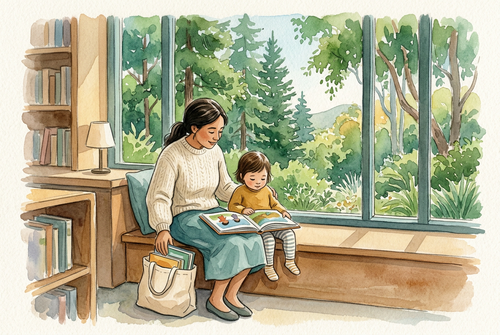
The featured image is an illustration of an indoor weather-noticing activity, not a photograph of a particular family or weather event.