
An indoor mermaid birthday party does not need a pool, a race, or a room full of equipment. A few sheets of paper can become an imaginary ocean, and one good story prompt can give the party somewhere to go.
These indoor mermaid party games are editorial activity suggestions, not a tested party package. Choose two or three for your actual guests rather than trying to complete every idea. Adjust materials, instructions, and participation for the children, available space, and adult supervision.
Plan for the room and the people first
Set aside a usable table or seating area, keep walking routes clear, and choose materials appropriate for the actual children. An adult should manage any preparation that requires cutting or other tools. This activity list does not establish an age rating for supplies or replace their instructions.
Offer ways to draw, speak, point, dictate, or watch. A child does not have to perform in front of the group to take part. If you have guests who prefer a quieter moment, plan where they can pause with their caregiver rather than promising the whole party will stay quiet.
1. Build an imaginary mermaid map
Set out: A large sheet of paper or individual sheets, plus suitable drawing materials.
Begin with an imaginary coastline and ask each guest to add one place. It might be the Library of Lost Songs, a sleepy sea dragon's garden, or a tiny underwater bakery. These are made-up places, not marine facts.
Let children draw, name a place for an adult to write, or point to where their idea belongs. When the map feels complete, invite someone to choose a starting point and a destination. Ask, “What could happen between them?” There is no winning route or fastest answer.
2. Tell a one-sentence ocean story
Set out: Nothing, or the map from the first game.
An adult begins with a simple original sentence: “The mermaid opened her mailbox and found a very soggy invitation.” Each person can add a sentence, suggest one word, or pass.
If the story stalls, offer a choice: “Did the invitation come from the moon jellyfish or the traveling lighthouse?” Keep it playful without correcting children's ideas into a sensible plot. End when the group wants to stop, even if the mystery remains unresolved.
3. Invent a sea creature with three clues
Set out: Paper and drawing materials, if wanted.
Ask each guest to imagine a creature and share three clues. For example: “Mine has striped ears, sleeps in a teacup, and sings when it rains.” Other guests suggest a name or guess what it might look like.
Make clear that these are invented creatures. There is no need to reward a scientifically correct answer. A child who would rather not speak can show a drawing while an adult reads their clues.
4. Copy the mermaid's pattern
Set out: A place to sit or stand comfortably, with enough room for the movements you choose.
Use a small sequence such as waving a hand, opening your palms, and pointing toward an imaginary horizon. Invite guests to copy it in whatever way works for them. A seated hand version can be the main game, not a lesser alternative.
Keep participation optional. This version has no elimination round and no requirement to get faster. A guest can be the pattern chooser, describe a pattern in words, or watch. Stop or change the activity if the group is no longer enjoying it.
5. Draw the missing part of the ocean scene
Set out: Simple adult-prepared drawings with an unfinished wave, boat, or imaginary mermaid home.
Each guest adds what they think is missing. A blank patch beside a house might become a garden, a library, or a parking space for a sea turtle taxi. Nobody needs to match the adult's original idea.
Use individual pages if sharing materials or taking turns would complicate the group. Guests can take their own page home if they want; a separate party favor is optional.
6. The mermaid's postcard home
Set out: Paper divided into a drawing area and a few lines, or an ordinary blank page.
Invite children to imagine one stop on the party map. What would their mermaid send home? They can draw a place and finish “Today I discovered…” or dictate a sentence.
Keep the postcards within the group unless families have agreed otherwise. A sharing circle is optional. The activity can end simply by putting the drawings together for a quick look.
A flexible indoor party activity schedule
For an illustrative 45-minute activity block, try ten minutes of map drawing, ten minutes of storytelling, fifteen minutes for an individual drawing choice, and ten minutes to finish and pack up. These durations are suggestions, not tested attention spans or a schedule that will fit every child.
Food, birthday singing, arrival, and departure need their own time outside that example. Shorten a game, repeat a favorite, or stop early. You are hosting a gathering, not running a lesson with a completion target.
Help guests know what to expect
Describe the party accurately on the invitation: indoors, no swimming, and a few optional drawing or story activities. Our mermaid birthday invitation wording guide has original examples you can adapt.
For the room, mermaid party decorations for small spaces focuses on one visual corner. Keep the game table useful rather than covering it with decorations.
Choose less, leave room for play
Start with one shared activity and one optional individual activity. Keep a third idea in reserve, not as another task you must deliver. If the children spend the afternoon inventing the mermaid bakery from the first game, you already have somewhere interesting to be.
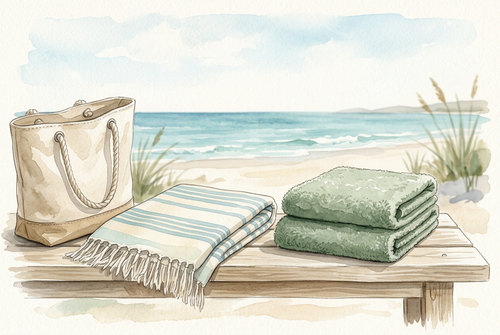
The featured watercolor is an imagined activity scene, not a tested event, product kit, or preview of downloadable worksheets. Draw your own simple pages and choose supplies appropriate for your guests.